

A home office offers space to work, learn and pursue your interests at every stage of life. Discover how thoughtful furniture choices, lighting and layout can create a beautiful workspace that supports your comfort and changing needs.
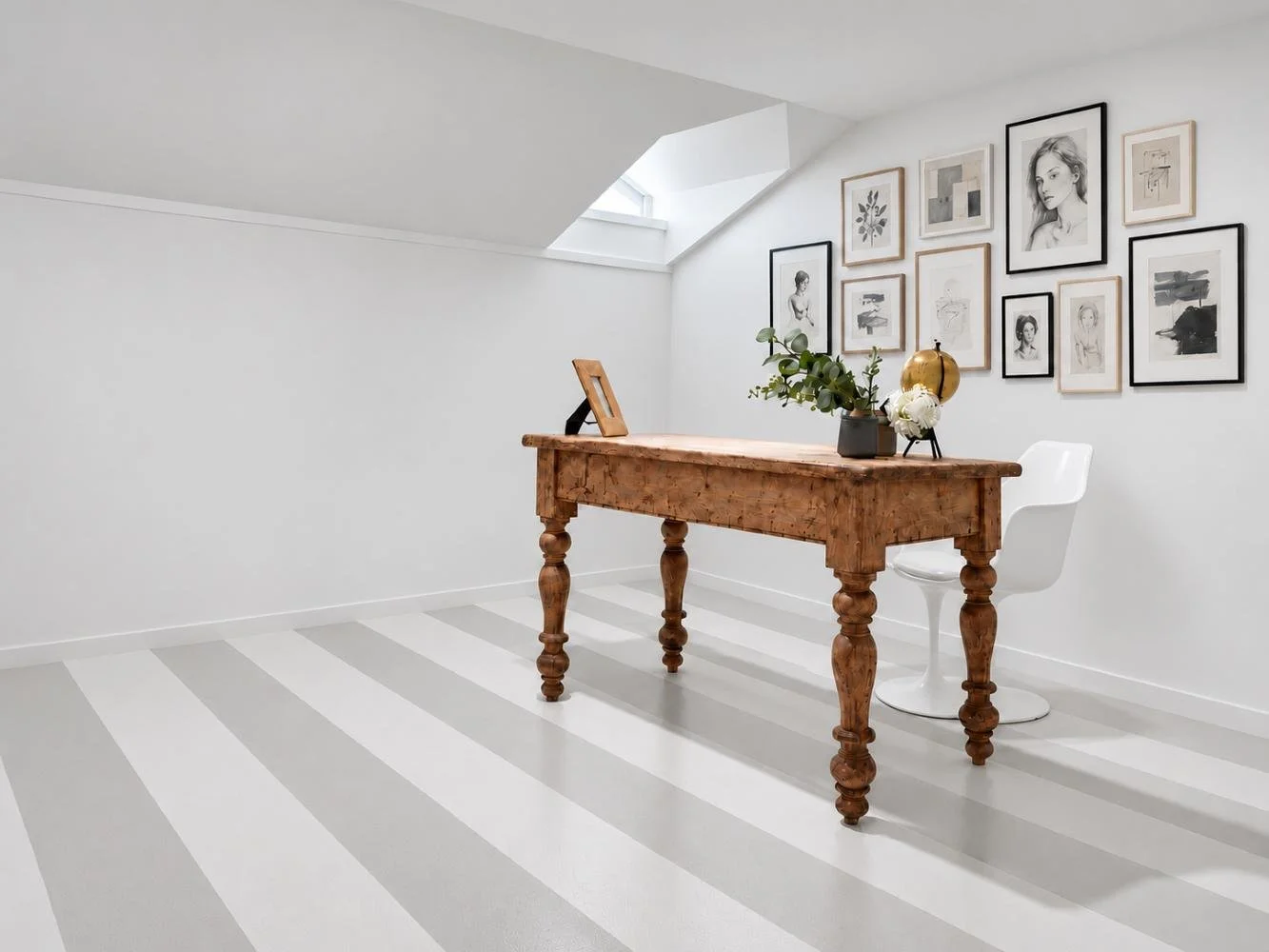
Image Design Anthropic
A home office can earn its place long after the daily commute ends. It might be where you run a business, study something new, contribute to a community group, manage household affairs or finally begin writing that book
Whatever your stage of life, having somewhere to concentrate is worth considering when planning your home. It needn’t occupy an entire room. A thoughtfully designed nook can be just as valuable. What matters is whether the space suits what you do and feels comfortable to use
Working from home deserves thoughtful design
The freedom to work from home has obvious appeal, but comfort takes more than a laptop and a spare chair.
A 2024 review published in the Journal of Occupational Health found mixed experiences of homeworking, with personal circumstances influencing its benefits and challenges. The researchers concluded that a single approach cannot suit everyone. pubmed.ncbi.nlm.nih.gov
This reinforces a principle at the heart of my approach to residential design: start with the person.
Before selecting a desk or planning joinery, consider what you will actually do there. Will you spend several hours on a computer, spread out paperwork, take video calls or work on creative projects? Will someone else share the space? Do you need quiet, privacy or somewhere to leave a project undisturbed?
The answers help determine the location, furniture, lighting and storage the space needs.
Design for your body as well as your activities
As we get older, changes in vision, joint comfort, mobility or energy make a familiar setup less comfortable. These changes vary from person to person. The Out of Office research highlights the value of adapting workspaces to individual needs, including existing health conditions.
A useful starting point is to notice what you are working around. Perhaps you lean forward to read, avoid a stiff drawer or finish a session with an aching back. Those small frustrations belong in the design brief.
These everyday frustrations belong in the design brief. They offer useful clues about what needs to change.
Four priorities for a comfortable home office
The Out of Office guidance identifies furniture, lighting, accessible storage and regular movement as important considerations for working well at home. designage.org
1. Furniture that fits you
Choose seating and a desk arrangement that support a comfortable working position. Adjustable furniture gives you more scope to refine the setup. Position your screen, keyboard and frequently used equipment to avoid sustained hunching, twisting or reaching.
2. Light you can control
Consider daylight alongside task lighting, with blinds or curtains to manage glare. Check the space at different times of day: a desk that feels comfortable in the morning may receive distracting reflections in the afternoon.
3. Storage within comfortable reach
Keep everyday items easy to access. Consider how drawers and cupboard doors open, and avoid arrangements that require frequent stretching or bending. Plan cable storage alongside the furniture layout to keep circulation space clear.
4. Space to move
Allow space to move your chair, read in a reading chair, not at the desk and take regular breaks.
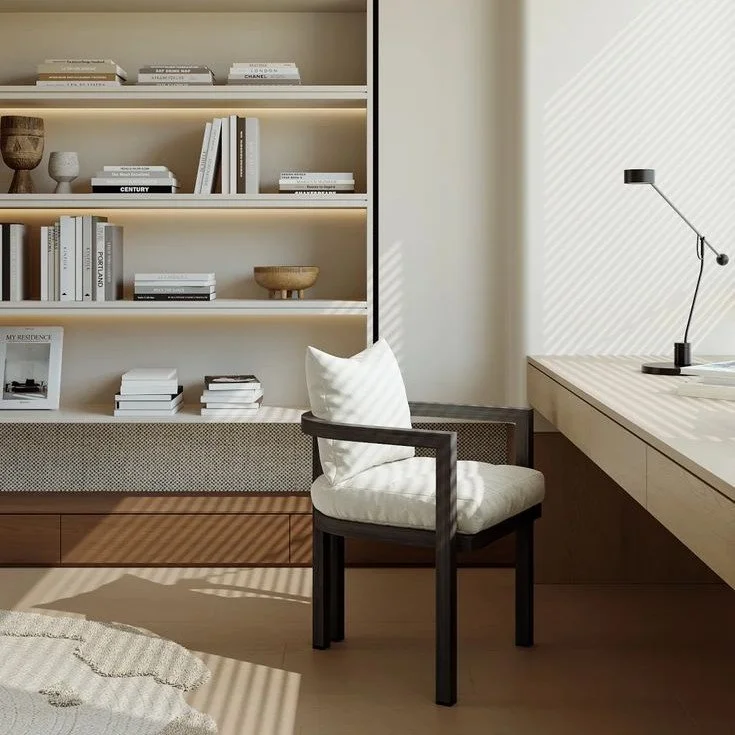
Image source - Pinterest
Make room for pleasure and personality
A home office deserves the same design attention as the rest of your home.
When planning a workspace, I consider the view from the chair, the materials you touch and the objects you want around you. Artwork, favourite books and a considered palette can give the space a sense of belonging within your home.
It is also worth thinking about how the room feels when you finish. In a shared living space, somewhere to put away paperwork and equipment can help restore the room to its other purpose. A dedicated office might benefit from a door you can close, leaving unfinished tasks until tomorrow.
The aim is to create somewhere you enjoy using, with a clear place in your daily life.
Leave room for change
When investing in a home office, consider how easily it could adapt.
Before committing to built-in joinery, ask whether it will accommodate a different chair, a larger screen or another person using the desk. Consider whether shelves can be repositioned and whether the room could support a different activity in the future.
I approach these decisions as part of creating a considered, future-ready home. Your workspace should have room to evolve alongside your interests, routines and physical needs.
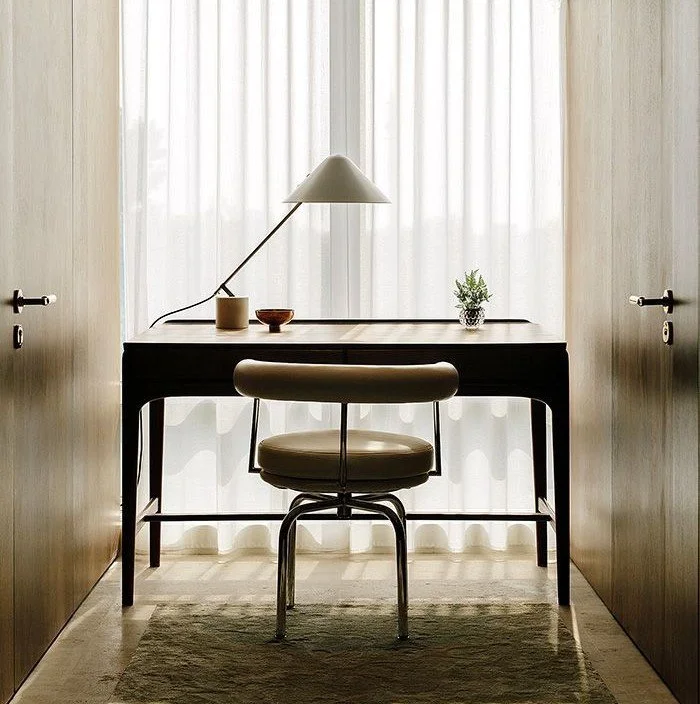
Photography © Lit Ma, via AD France.
Start by noticing one thing
Spend ten minutes at your usual workspace and ask: What am I adjusting my body to accommodate?
Choose one frustration to address. A considered home often begins with paying attention to the things we have grown used to tolerating.
At Design Anthropic, I create personalised interiors that bring together beauty, practicality and an understanding of the people who live in them. That includes spaces for the work, interests and ideas that continue throughout life.
Planning a home office or reconsidering an existing space? Get in touch to arrange a complimentary 15-minute phone conversation about your plans and whether Design Anthropic is the right fit.
Ainslie.
Further reading: Experiences of working from home: umbrella review and Out of Office: guidance on working from home as we age.